
How to Remove Black Beard Algae from Your Aquarium
Black Beard Algae, often shortened to BBA, is one of the most frustrating algae problems you can deal with in an aquarium.
It grows in dark, fuzzy clumps that cling tightly to wood, rocks, plants, filter outlets, decorations, and even aquarium equipment. Once it gets established, it can be incredibly stubborn. When Black Beard Algae gets really bad, it can make even experienced fishkeepers feel like throwing in the towel.
The good news is that Black Beard Algae can be removed. You just need the right approach.
At Simply Fish, we have serviced plenty of aquariums over the last five years, and we have tested a range of different methods for dealing with BBA. In our experience, nothing has beaten APT Fix by The 2HR Aquarist for ease of use and effectiveness.
This product was quite literally designed to deal with algae problems like Black Beard Algae.
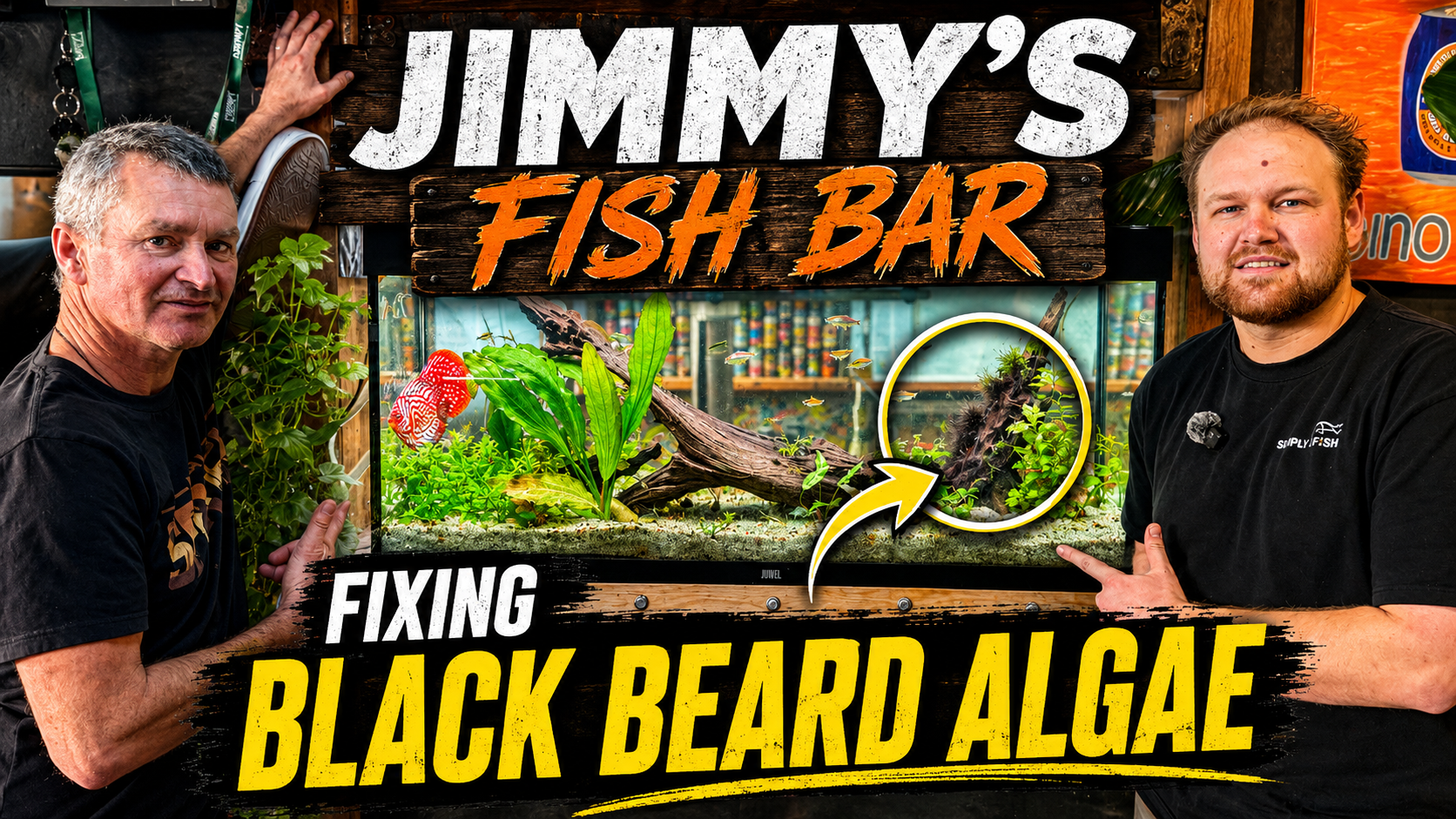
In the YouTube video at the bottom of this blog post, you can see us tackling some light Black Beard Algae in our good friend Jimmy’s aquarium. His tank had some BBA starting to appear on the hardscape, so we used our preferred method to treat it before it became a much bigger issue.
What Is Black Beard Algae?
Black Beard Algae is a tough, brush-like algae that usually appears as dark grey, black, or deep green tufts. It often grows on areas with higher water flow, such as filter outlets, driftwood, rocks, plant edges, and aquarium décor.
Unlike softer green algae, Black Beard Algae does not simply wipe away. It attaches firmly to surfaces and can be very difficult to manually remove once it has taken hold.
This is why many aquarium owners get frustrated with it. You can scrub it, pull at it, or add algae-eating fish, but it often keeps coming back unless you deal with it properly.
What Causes Black Beard Algae?
Black Beard Algae can appear for several reasons, and there is not always one single cause. Common triggers include:
- Inconsistent or low CO2 levels in planted aquariums
- Excess nutrients in the water
- Poor water flow or unstable flow patterns
- Too much light
- Organic waste building up in the aquarium
- Lack of regular maintenance
- Imbalance between lighting, nutrients, and plant growth
In simple terms, Black Beard Algae usually appears when something in the aquarium is out of balance.
That does not mean you have a “bad” tank. It just means the aquarium needs a reset, better maintenance, or a more targeted algae removal method.
Why Algae-Eating Fish Alone Usually Won’t Fix BBA
A lot of people add an algae-eating fish to their aquarium and expect it to solve the problem.
Unfortunately, that usually does not work with Black Beard Algae.
Fish like Otocinclus, Siamese algae eaters, bristlenose plecos, and other clean-up crew species can be helpful in an aquarium, but they will not usually remove healthy, established BBA on their own. They may nibble at it here and there, but they are unlikely to completely clear it while it is still strong and actively growing.
That is where APT Fix comes in.
APT Fix stunts and kills the Black Beard Algae, making it much easier for algae-eating fish and other clean-up crew members to finish the job.
In our experience, the best combination is:
APT Fix + Otocinclus or another suitable algae-eating fish
The APT Fix weakens the algae, and the clean-up crew helps remove what is left behind.
Our Favourite Method for Removing Black Beard Algae
Over the years, we have found that the most effective way to remove Black Beard Algae is to treat it directly.
For this, we use APT Fix by The 2HR Aquarist.
APT Fix can be used in different ways depending on how severe the algae problem is and where the BBA is growing.
You can apply it:
- Directly in the aquarium
- As a spot treatment underwater
- Out of water on hardscape, wood, or rocks
Where possible, we prefer to remove the affected hardscape from the aquarium and treat it outside of the water.
In Jimmy’s tank, the Black Beard Algae was on a piece of wood that was easy to remove. So we took the wood out, treated the affected areas directly, and then returned it to the aquarium after treatment.
In our opinion, this is best practice when it is practical to do so.
Treating out of water allows you to target the algae more directly and avoid unnecessarily dosing the entire aquarium when only a specific piece of hardscape needs attention.
Step-by-Step: How to Remove Black Beard Algae
1. Identify Where the BBA Is Growing
Start by checking the aquarium carefully.
Look for Black Beard Algae on:
- Driftwood
- Rocks
- Plant leaves
- Filter outlets
- Heater cords
- Decorations
- Substrate edges
- Aquarium glass near hardscape
It is important to work out whether the BBA is only in one area or whether it has spread throughout the tank.
If it is only on a small piece of hardscape, you may be able to remove and treat that piece directly.
If it is spread throughout the aquarium, you may need to treat the tank in sections.
2. Remove Affected Hardscape Where Possible
If the BBA is growing on wood, rocks, or decorations that can easily be removed, take them out of the aquarium.
This makes the treatment much easier.
Place the affected hardscape on a towel or in a bucket, then apply APT Fix directly to the areas covered in Black Beard Algae.
This method is especially useful when the algae is growing heavily on wood or rocks.
3. Treat the BBA with APT Fix
Apply APT Fix directly to the Black Beard Algae.
Follow the instructions on the bottle carefully and avoid overdosing. Like any aquarium treatment, it is important to use it properly and safely.
APT Fix works by damaging and weakening the algae. Over time, the BBA should change colour, weaken, and become easier for fish, shrimp, snails, or manual cleaning to remove.
4. Return the Hardscape to the Aquarium
Once the treatment is complete, return the hardscape to the aquarium.
Make sure everything is placed securely and that fish still have enough swimming space and shelter.
5. Add or Support Your Clean-Up Crew
Once the BBA has been weakened, algae-eating fish can be much more effective.
Otocinclus are a great option for many peaceful planted aquariums, provided the tank is suitable for them. Other algae-eating species may also help, depending on your setup.
Just remember: algae-eating fish are not magic.
They should be treated as part of the solution, not the whole solution.
APT Fix does the heavy lifting. The clean-up crew helps finish the job.
Useful Tip: Flip Smaller Rocks Upside Down
Here is a simple trick we have found useful.
If you have Black Beard Algae growing on smaller rocks or pieces of hardscape, you can sometimes turn them upside down so the algae is buried into the substrate.
Because the BBA is no longer receiving light, it will eventually die off.
This will not work in every situation, but it is a handy option for smaller rocks or hardscape pieces where the algae is only growing on one side.
Can You Treat Black Beard Algae While It Is Underwater?
Yes, APT Fix can be used underwater as a spot treatment.
This is useful when the affected area cannot easily be removed from the aquarium.
For example, you may need to treat BBA growing on:
- Large rocks
- Fixed hardscape
- Filter outlets
- Aquarium corners
- Large pieces of wood
- Plant bases
When treating underwater, it is important to be careful and targeted. Turn off the flow temporarily if needed, apply the treatment directly to the affected area, and avoid overusing the product.
Always follow the product directions.
Should You Remove Plant Leaves with BBA?
If Black Beard Algae is growing on older or badly affected plant leaves, it is often best to trim those leaves off.
This is especially true for slow-growing plants such as Anubias, Bucephalandra, Java Fern, and Cryptocoryne.
If the leaf is completely covered, it is usually not worth saving. Removing heavily affected leaves helps reduce the amount of algae in the aquarium and encourages healthier new growth.
For light algae on plant leaves, careful spot treatment may help, but you need to be more cautious than you would be with rocks or wood.
How to Stop Black Beard Algae Coming Back
Removing BBA is only part of the job. You also want to reduce the chance of it returning.
To help prevent Black Beard Algae from coming back, focus on aquarium balance.
Keep Up with Water Changes
Regular water changes help remove excess nutrients and organic waste from the aquarium.
For most aquariums, a weekly water change is a good starting point.
Avoid Overfeeding
Overfeeding leads to extra waste, which can contribute to algae problems.
Feed only what your fish can eat within a short period, and remove uneaten food where possible.
Maintain Your Filter
A dirty or clogged filter can reduce water quality and flow.
Clean your filter media in old aquarium water when needed, and make sure your filter is running properly.
Check Your Lighting
Too much light can make algae problems worse.
If you are dealing with BBA, consider reducing your lighting period. Many planted tanks do well with around 6–8 hours of light per day, depending on the setup.
Improve Plant Health
Healthy plants compete with algae.
Make sure your plants are getting the right balance of light, nutrients, and CO2 if applicable. In planted aquariums, unstable CO2 can be a major contributor to BBA.
Keep Flow Consistent
BBA often appears in areas with strong or inconsistent flow.
Make sure your aquarium has good circulation, but avoid blasting one area too aggressively.
Final Thoughts
Black Beard Algae is one of the most annoying algae problems in the aquarium hobby, but it is not unbeatable.
In our experience, the most effective method is a combination of direct treatment with APT Fix and support from a suitable clean-up crew, such as Otocinclus or other algae-eating fish.
APT Fix weakens and kills the BBA, making it much easier for the clean-up crew to remove what is left.
If the algae is growing on removable hardscape, we recommend taking the piece out of the aquarium and treating it directly. This gives you better control and is often the most effective way to deal with the problem.
You can see this method in action in the video below, where we treat some light Black Beard Algae in Jimmy’s aquarium.
If you are battling Black Beard Algae in your own tank, do not give up. With the right treatment, better maintenance, and a bit of patience, you can get your aquarium looking clean and healthy again.
Products Used
APT Fix by The 2HR Aquarist
Used to directly treat and weaken Black Beard Algae.
Python Tank Siphon
Used for aquarium maintenance and water changes.
Otocinclus or suitable algae-eating fish
Helpful as part of the clean-up crew once the BBA has been weakened.