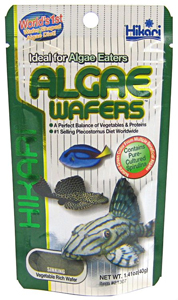
Hikari Tropical Algae Wafers
Hikari Tropical Algae Wafers are a sinking daily food developed specifically for plecos and other algae-eating bottom feeders.
The large, firm wafers contain high levels of vegetable matter including spirulina and chlorella and are designed to stay intact underwater long enough for grazing fish to feed naturally.
If you keep plecos or other herbivorous bottom dwellers, this is one of the staple foods we'd be very comfortable recommending.
Why Choose Hikari Algae Wafers?
Plecos and other algae grazers shouldn't be expected to survive purely on whatever algae happens to grow in the aquarium.
Hikari Algae Wafers provide a consistent, nutritionally complete food designed specifically for these fish.
Key benefits include:
-
Designed specifically for plecos and algae-eating bottom feeders
-
High levels of vegetable matter
-
Contains spirulina and chlorella
-
Sinks directly to bottom-feeding fish
-
Firm wafer designed for extended grazing
-
Does not rapidly dissolve in the aquarium
-
Suitable as a daily diet
-
Added vitamins including stabilised vitamin C
Who Is It For?
We recommend Hikari Algae Wafers for:
-
Plecostomus and other plecos
-
Bristlenose plecos
-
Other herbivorous or algae-grazing catfish
-
Many freshwater algae grazers
-
Suitable marine herbivores
They can also be eaten by shrimp, snails and other aquarium inhabitants, although whether they are suitable as a primary diet depends on the species.
What About Corydoras and Loaches?
This is an important distinction.
Hikari Algae Wafers are not our first-choice staple food for Corydoras or most loaches.
Corydoras are not primarily algae eaters and need a more appropriate mixed diet.
For Corydoras, loaches and similar omnivorous bottom feeders, we'd generally recommend Hikari Sinking Wafers or another quality sinking food formulated specifically for them.
There's nothing wrong with Corydoras having a nibble on an algae wafer in a community tank, but we wouldn't use it as their only food.
Do Plecos Still Need Food If There Is Algae in the Tank?
Yes.
One of the most common misconceptions we see is that buying an "algae eater" means you don't have to feed it.
You absolutely still need to feed your plecos and other algae grazers.
The amount and nutritional quality of algae naturally growing in an aquarium is unpredictable and often nowhere near enough to provide a complete diet.
An algae wafer gives you a reliable way to make sure they're actually receiving food.
Does Feeding Algae Wafers Make My Pleco Clean the Tank?
No.
Think of these as food for an algae-eating fish, not a product designed to remove algae from your aquarium.
A pleco may naturally graze surfaces, but adding a pleco or feeding algae wafers isn't a replacement for controlling lighting, nutrients and carrying out normal aquarium maintenance.
How Big Are the Wafers?
Each standard Hikari Algae Wafer is approximately 17–18mm across.
That's a reasonably large wafer designed to allow plecos and other grazing fish to rasp and feed from it over time.
If you have particularly small algae-eating fish, Hikari also produces Mini Algae Wafers, which may be easier for them to feed from.
Which Pack Size Should I Buy?
Simply Fish currently stocks:
20g
Great for smaller aquariums, one or two smaller plecos, or trying the food for the first time.
40g
A good everyday size for most home aquariums.
82g
Better value if algae wafers are a regular part of your feeding routine.
250g
Best suited to larger fish, multiple aquariums, multiple plecos or customers who use a significant amount of food.
As with all fish food, we'd rather see you buy a sensible amount and use it while fresh than automatically choose the biggest packet.
How Do I Feed Hikari Algae Wafers?
Feed only an amount your fish can completely consume within approximately two hours.
Many plecos and bottom feeders are more active after the aquarium lights begin to dim, so late afternoon or evening can be an excellent time to feed them.
A simple feeding routine is:
-
Drop the wafer near the area where your pleco normally hides or feeds.
-
Allow the fish time to find and graze on it.
-
Check whether the wafer has been consumed within around two hours.
-
Remove significant uneaten food.
-
Adjust the amount next time based on what was actually eaten.
Don't keep adding wafers simply because you haven't seen the fish immediately come out to feed.
Many plecos are shy or nocturnal and may wait until the aquarium is quieter.
How Many Wafers Should I Feed?
There isn't one correct number for every aquarium.
The correct amount depends on:
For a smaller pleco, an entire large wafer may be more food than necessary.
Start conservatively and use the two-hour consumption rule as your guide.
Ingredients
Hikari Algae Wafers contain ingredients including:
The formula combines vegetable ingredients with additional proteins, vitamins and minerals to provide more complete nutrition than relying on aquarium algae alone.
Guaranteed Analysis
Crude Protein: 33% minimum
Crude Fat: 4% minimum
Crude Fibre: 3% maximum
Moisture: 10% maximum
Ash: 17% maximum
Phosphorus: 0.8% maximum
Wafer Size: Approximately 17–18mm
Food Type: Sinking wafer
Simply Fish Recommends
If you've got a Bristlenose or another pleco, this is one of those foods we'd nearly always want you to have in the cupboard.
A surprisingly common mistake is assuming that because a fish is sold as an "algae eater", it'll find enough food by cleaning the aquarium.
Often it won't.
We like feeding a proper sinking wafer because you can actually control how much food is being offered and make sure the pleco receives something even in a very clean aquarium.
For many plecos we'd also vary the diet where appropriate rather than feeding nothing but one wafer forever.
And if you're actually shopping for Corydoras, grab Hikari Sinking Wafers instead — they're much better matched to what Corydoras need.
FAQ
Are Hikari Algae Wafers good for Bristlenose plecos?
Yes. They're designed specifically for plecos and other algae-eating bottom feeders and are one of our regular recommendations for Bristlenose.
Do algae eaters need to be fed?
Yes. Never assume the algae naturally growing in your aquarium will provide enough complete nutrition for your fish.
Are Hikari Algae Wafers suitable for Corydoras?
They may eat them, but we wouldn't use Algae Wafers as the primary food for Corydoras. Hikari Sinking Wafers or another suitable omnivorous bottom-feeder diet is a better staple.
Are they suitable for loaches?
Some loaches may eat them, but Hikari Sinking Wafers are generally the more appropriate dedicated option for loaches.
Do the wafers sink?
Yes. They're designed to sink to the bottom where plecos and other bottom-feeding algae grazers can access them.
Do they dissolve quickly?
No. Hikari specifically designs the wafer to remain intact for an extended period so grazing fish have time to feed from it.
When should I feed my pleco?
Late in the day or around lights-out often works well because many plecos and other bottom feeders are more active at night.
How long should I leave an algae wafer in the tank?
Hikari recommends feeding an amount that will be completely consumed within approximately two hours. Remove significant uneaten food afterwards.
What is the difference between Hikari Algae Wafers and Mini Algae Wafers?
The standard wafer is approximately 17–18mm across. Mini Algae Wafers offer the same general concept in a smaller format for smaller algae-eating fish.
Can algae wafers replace vegetables for my pleco?
They provide a convenient complete diet, but depending on the pleco species and your feeding approach, you may still choose to offer other suitable foods for dietary variety.